Dr. Gymbro
←

#bench press

8 articles
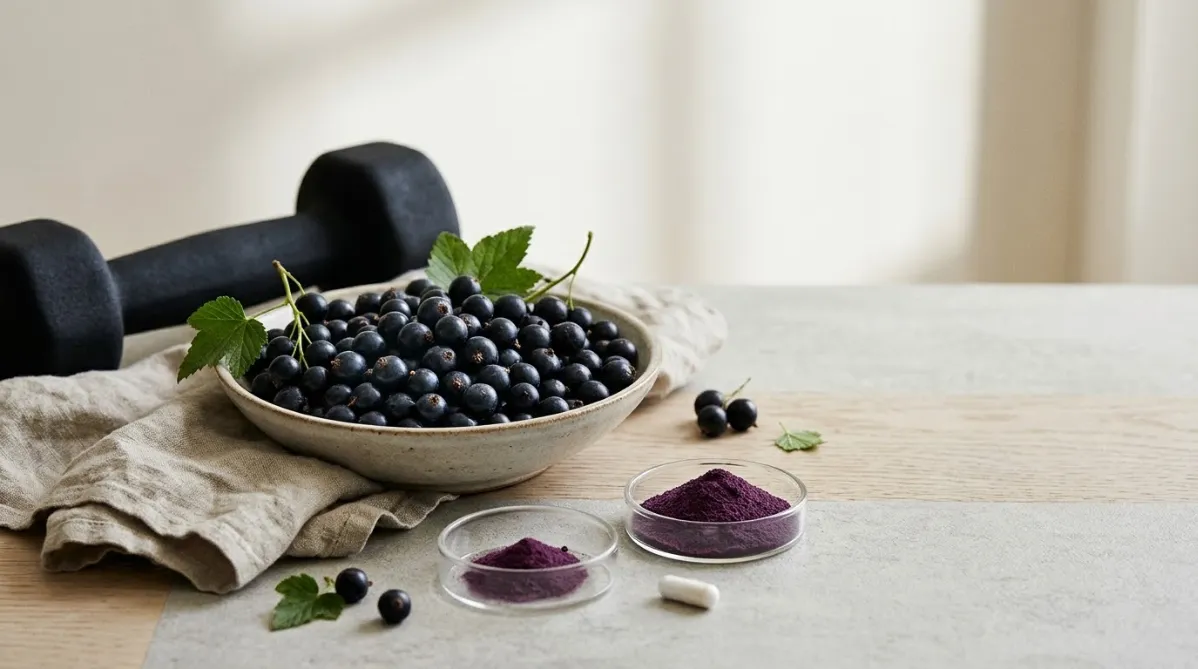
A wide, editorial-style still life photographed in soft natural window light on a pale oak or light grey concrete surface. In the center-left, a shallow ceramic bowl filled with plump, dusky blue-black blackcurrants, some with tiny glossy highlights and a few still attached to slender green stems with serrated leaves. Beside the bowl, a matte black dumbbell handle rests diagonally, partially in frame and slightly out of focus, suggesting strength training without a gym setting. In the foreground, two small minimalist glass dishes sit side by side: one holds a small pile of deep purple powder, the other a larger pile, a subtle visual nod to the low versus high dose. A few scattered berries add a natural touch. A folded linen cloth in muted oatmeal tone adds texture, and a single white capsule sits near the dishes for scale.

The background is a soft, creamy off-white wall with gentle shadow gradients from the window, leaving generous negative space on the right third of the frame for title overlay. The color palette is restrained and modern: deep indigo and violet from the berries, warm neutral beige, charcoal black, and touches of fresh leaf green. Shallow depth of field, crisp focus on the berries in the foreground, subtle film grain, and a calm, refined, contemporary magazine aesthetic like a wellness or sports science journal cover. Overhead angle tilted slightly to about 35 degrees, balanced composition, clean and uncluttered, with natural soft shadows and a premium, quietly athletic mood.
nutrition

Cassis pour les haltérophiles : pourquoi la petite dose l’emporte sur la grande

BY DR. GYMBRO ·

Une semaine d’extrait de cassis a augmenté le 1RM au développé couché chez des haltérophiles entraînés ; la petite dose de 250 mg s’avère souvent aussi efficace, voire supérieure, à la dose de 600 mg. La haute dose a fait grimper la puissance au développé de près de 80 W par rapport au placebo, tandis que la petite dose a amélioré les scores du test Stroop. Le placebo a cependant dépassé le groupe sans capsule au leg‑press, ce qui oblige à interpréter ces gains avec prudence. Avec seulement 20 participants et une période de sept jours, il s’agit d’un signal prometteur plutôt que d’une preuve définitive. Voici ce qui tient la route, ce qui reste incertain, et qui pourrait l’essayer.

A wide, editorial-style still life photographed in soft natural window light on a pale oak gym bench. In the foreground, a small rustic ceramic bowl in warm sand tones holds a mound of fine golden-beige ashwagandha root powder, with a few dried gnarled ashwagandha roots and a sprig of green leaves with tiny orange-red berries resting beside it. A wooden scoop dusted with powder lies at an angle. Just behind, a matte black barbell with a single chalk-dusted steel plate sits slightly out of focus, a light haze of white chalk hanging in the air and catching the sunlight.

On the left side, a neat stack of printed research papers with a sharp black pen and a few muted sage-green sticky tabs. One page shows a simple, abstract forest-plot-style line graph with small squares and horizontal lines, subtly out of focus, hinting at statistics without legible text. A pair of minimal round reading glasses rests on the pages. A small linen gym towel is folded near the edge of the bench.

The palette is restrained and modern: warm cream, soft sage green, muted terracotta, charcoal black, and brushed steel highlights. The background is a softly blurred minimalist studio space with a pale plaster wall and a long soft shadow cast by a window frame, giving a calm, contemplative mood. Shallow depth of field, crisp detail on the powder and roots, gentle film-like grain, and generous negative space on the right third of the frame for a headline overlay. The overall look is a clean, trendy health-and-science journal cover, thoughtful and skeptical rather than promotional, balancing the natural herbal element against the discipline of strength training.
nutrition

Ashwagandha pour les haltérophiles : boost de force ou mirage statistique ?

BY DR. GYMBRO ·

L'ashwagandha est commercialisée auprès des haltérophiles comme un accélérateur de force et de masse, et une nouvelle méta‑analyse d’essais randomisés sur l’entraînement en résistance a mis en évidence des gains au développé couché et au squat en 1RM qui semblent impressionnants sur le papier. Mais seuls trois essais regroupant 161 participants pouvaient être synthétisés. Les deux résultats de force ont perdu leur signification sous le test plus strict HKSJ, chaque résultat reposant sur une seule étude influente. Le GRADE a évalué les preuves comme faibles à très faibles, et aucun effet fiable sur la masse grasse n’a été détecté. Voici ce que montre réellement la revue, et qui pourrait encore vouloir l’essayer.
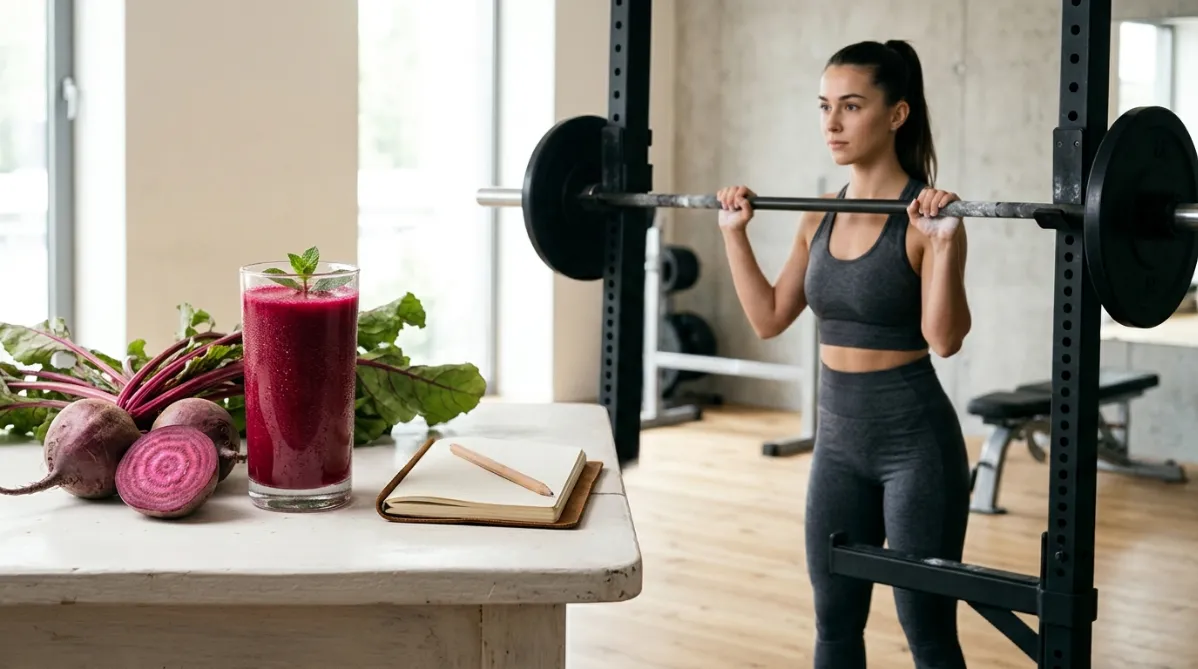
A wide, editorial-style photograph of a bright, modern gym corner softened by morning window light. In the foreground, a rustic matte-white ceramic table holds a tall clear glass of deep magenta beetroot juice, beads of condensation on the glass, a few fresh whole beetroots with leafy crimson-veined stems beside it, and one beetroot sliced in half to reveal its vivid concentric purple-pink rings. Next to the glass sits a small, neat notebook with a pencil, suggesting a research note, with no legible text. Behind the table, slightly out of focus, a young woman lifter with a tidy ponytail and a fitted charcoal training set stands at a barbell resting on a squat rack, chalk-dusted hands gripping the bar, calm and focused expression. A loaded bench with a bar is visible further back, with matte black plates and a light wooden floor. The palette is restrained and trendy: warm off-white, soft concrete gray, muted sage green accents from the beet leaves, and a bold beetroot magenta as the focal color. Shallow depth of field with a creamy bokeh background, natural side lighting casting long gentle shadows, subtle film grain. Composition follows the rule of thirds, with the juice and beets on the left third and the lifter on the right, leaving clean negative space in the upper area for a headline overlay. Mood is thoughtful, clean, and slightly skeptical, like a contemporary health and science journal cover. Realistic photography style, high-end magazine look, no text, no logos, no futuristic elements.
nutrition

Le jus de betterave n’a pas aidé les femmes haltérophiles — et a même ralenti le développé couché

BY DR. GYMBRO ·

Le jus de betterave est souvent présenté comme un booster naturel de performance, mais une étude croisée menée auprès de 18 femmes pratiquant la musculation n’a montré aucun bénéfice au squat. Plus surprenant encore, la puissance et la vitesse au développé couché ont légèrement diminué à une charge de 60 % du 1RM après une dose d’environ 6,7 mmol de nitrate prise 2,5 h avant l’entraînement. La baisse ne représente que ~5 W et 0,02 m/s, avec des p‑valeurs limites, ce qui reste loin d’être concluant. Voici ce que l’étude a testé, ce qu’elle ne peut pas nous dire, et ce que les athlètes peuvent encore envisager.
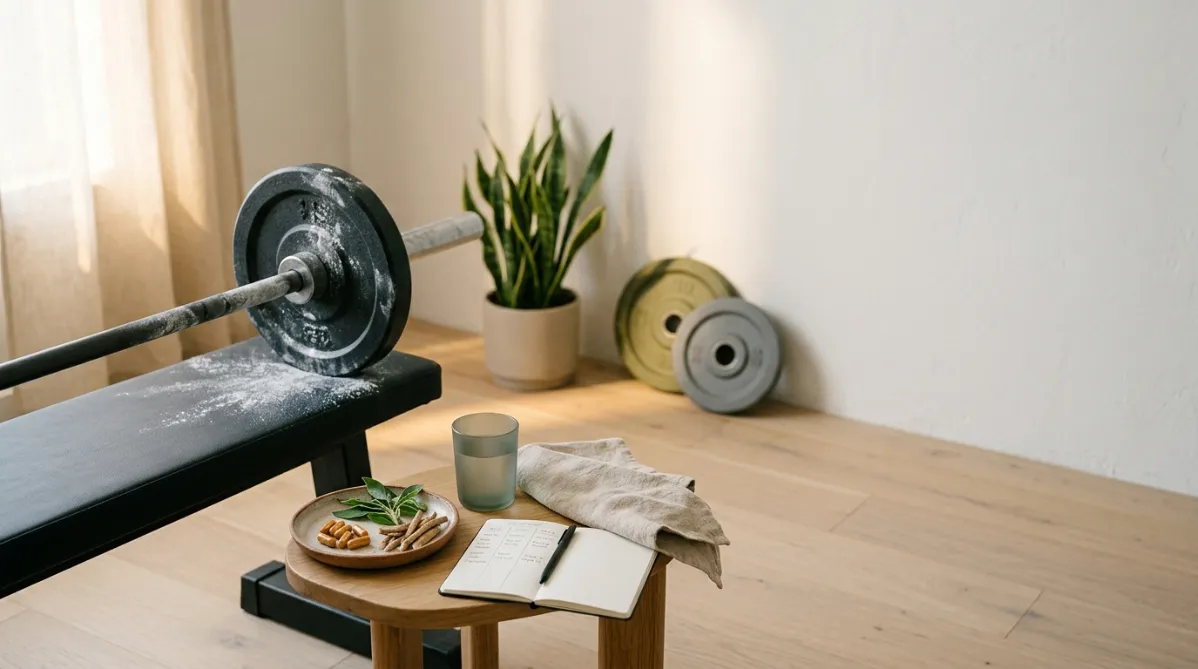
A wide landscape editorial photograph of a modern, softly lit home gym corner with pale oak flooring and a matte white wall. In the foreground, a chalk-dusted barbell rests across a minimalist bench, shot at a low angle with shallow depth of field. On a small natural-wood side table beside it sits a ceramic dish holding a few amber-colored capsules, a handful of dried ashwagandha roots, and a few green leaves. A matte glass of water and a folded linen towel sit nearby. A slim open notebook with a pen lies next to the dish, suggesting careful reading and note-taking, with blurred handwritten columns that suggest comparison, but no legible text.

Soft morning window light enters from the left, casting long, gentle shadows and a warm golden glow across the scene. The palette is muted and earthy: sage green, warm sand, cream, charcoal gray, and touches of terracotta. A single potted green plant in the background adds texture. Two weight plates in stacked, muted tones lean against the wall, slightly out of focus.

The composition follows the rule of thirds, with the barbell and supplement dish on the left and generous negative space on the right for headline overlay. The mood is calm, trustworthy, and analytical, like a contemporary health and science magazine cover. Crisp detail, natural film-like grain, subtle color grading, and a clean, uncluttered, premium lifestyle feel. No people, no text, no logos, no futuristic elements.
supplements

Ashwagandha SR double les gains au développé couché en 90 jours – lisez les petites lignes

BY DR. GYMBRO ·

Une capsule à libération prolongée d’ashwagandha prise quotidiennement a presque doublé les gains au développé couché comparé à un placebo sur 90 jours. Les participants ayant reçu 300 mg d’AshwaSR ont ajouté 15,31 kg à leur 1‑RM, contre 7,33 kg pour le groupe placebo. Cependant, l’augmentation de testostérone chez les hommes n’a pas dépassé celle du placebo, l’étude a été financée par le fabricant et les valeurs de VO2max semblent anormalement élevées. Voici ce que montre réellement l’essai, le dosage utilisé, à qui il peut convenir et qui devrait l’éviter.
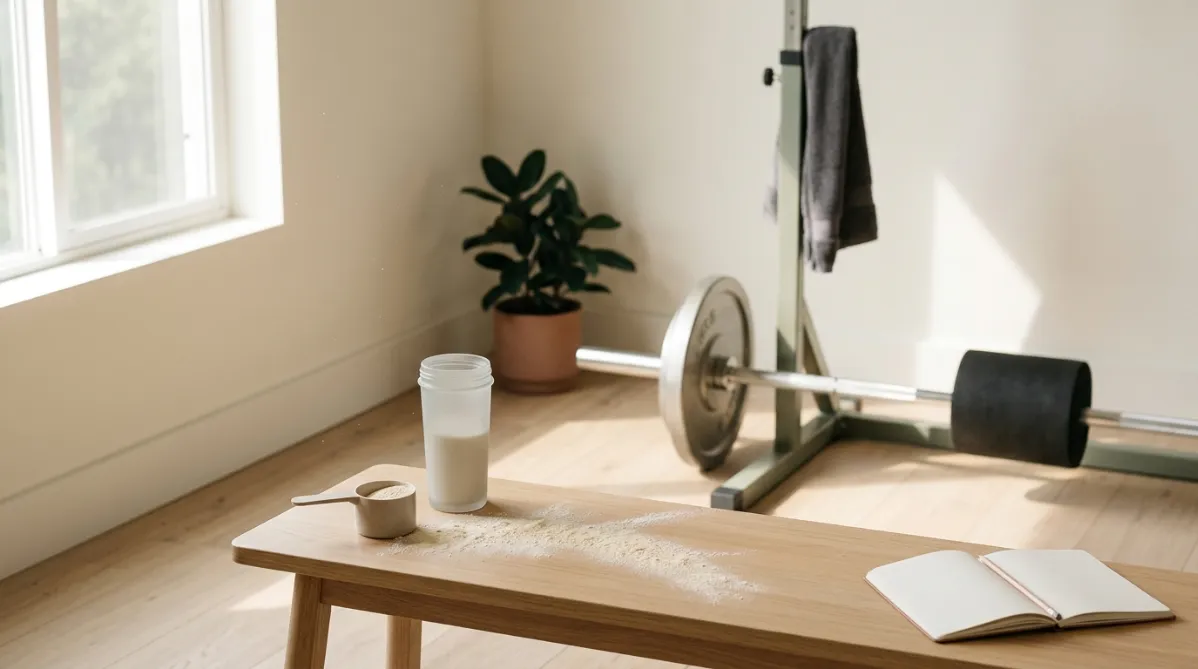
A wide, softly lit editorial photograph of a minimalist home gym corner with pale oak flooring and a warm off-white wall. In the foreground on a light wooden bench sits a matte ceramic scoop resting beside a simple frosted glass shaker bottle, with a delicate dusting of fine cream-colored protein powder spilled across the wood in a natural, casual arc. In the soft-focus midground, a loaded barbell rests on a squat rack with brushed steel plates, and a neatly folded charcoal towel hangs over the rack's upright. To the right, a small open notebook with a pencil lies on the bench, suggesting tracked training logs, with no legible text. Morning sunlight streams diagonally through a large window on the left, casting long gentle shadows and a warm golden glow across the scene, with subtle dust motes floating in the light. The color palette is muted and modern: sage green, warm sand, soft terracotta, and cream, with a single accent of deep forest green from a potted plant in the background corner. Shallow depth of field, crisp detail on the powder and scoop, creamy bokeh on the barbell. Shot as if with a 50mm lens at f/2, natural film-like grain, clean negative space on the upper right for headline overlay. The mood is calm, thoughtful, and science-minded, with a contemporary wellness magazine aesthetic, realistic and tactile, with no people, no logos, and no text.
nutrition

La poudre de protéine augmente-t-elle la force ? 23 essais dévoilent le hic

BY DR. GYMBRO ·

Ajouter de la poudre de protéine à votre entraînement rend‑il vraiment plus fort ? Une méta‑analyse de 2026, portant sur 23 essais randomisés et 611 jeunes adultes, a trouvé un avantage moyen de 7,4 kg au squat et de 2,6 kg au développé couché. Le bénéfice au squat était surtout présent dans les programmes de 12 semaines ou moins et dans les essais où la protéine était prise autour des séances et avant le coucher. Le signal lié au timing était toutefois marginal, aucune dose optimale n’a été établie, et les auteurs soulignent que le gain est conditionnel, pas universel. Voici ce que les données soutiennent et ce qu’elles ne soutiennent pas.

A wide, editorial-style still life photographed on a pale warm-gray concrete surface in soft, diffused morning window light. On the left side, a tall clear glass filled with deep magenta-crimson beetroot juice sits beside two halved raw beetroots, their concentric rings of vivid fuchsia and purple clearly visible, with a few small green-and-red-veined leaves draped casually nearby. On the right side, a matching clear glass of cloudy white creatine solution rests next to a small matte ceramic bowl heaped with fine white powder and a minimal wooden scoop, a light dusting of powder scattered across the surface. In the center, between the two sides, a simple matte black barbell grip and a single chalk-dusted weight plate edge rise into the frame at a low angle, hinting at lifting without showing a person. The composition is split in a balanced, symmetrical way, with a subtle vertical shadow line dividing the saturated magenta tones on the left from cool, neutral whites and creams on the right. The background is softly blurred with a muted sage-green and oatmeal-toned wall, with plenty of negative space at the top for a headline overlay. Shallow depth of field, crisp focus on the glasses' condensation droplets and the textured beetroot flesh. The color palette is limited and refined: magenta, cream, charcoal, and soft sage. The mood is clean, modern, and health-journal chic, like a contemporary wellness magazine cover, with natural shadows, a tactile matte finish, and subtle film-like grain. No text, no logos, no futuristic elements.
nutrition

Jus de betterave vs créatine : qui gagne pour la musculation en 72 heures ?

BY DR. GYMBRO ·

Un essai randomisé en croisé a opposé le jus de betterave à la créatine pendant environ 72 heures de supplémentation chez des haltérophiles novices. La créatine a permis davantage de répétitions au développé couché à 80 % du 1RM, tandis que le jus de betterave s’est démarqué sur la vitesse de la barre, l’oxygénation musculaire, le pic de fréquence cardiaque et la récupération mesurée par la variabilité du rythme cardiaque. Le résumé ne précise ni les doses ni le timing, d’où ces lacunes. Voici le tableau complet et les profils susceptibles de privilégier chaque supplément.
A sun-lit editorial still life on a pale oak gym bench: a loaded barbell rests on a rack just above it, chalk dust drifting in the air. In the foreground sits a small ceramic bowl of roasted beets, some sliced to show their deep magenta rings, with a few whole beets still wearing their leafy burgundy stems. Next to the bowl is a matte white supplement tub with a minimal label, a wooden scoop of fine white powder, and a clear glass of water catching soft highlights. A slim notebook lies open beside them with a simple hand-drawn bar graph and a pen, suggesting data and analysis without any readable text. Behind the bench, a softly blurred minimalist training space: raw concrete wall, tall window with warm morning light, a rack of black dumbbells fading into bokeh. The palette is earthy and modern: beet magenta, warm cream, charcoal, brushed steel, and touches of sage green from the beet leaves. Soft directional light from the left creates long gentle shadows and a slight film-grain texture. Shallow depth of field keeps the beets and powder tack sharp. The composition is wide and balanced, with negative space on the right for headline overlay. The overall feel is a clean, contemporary health and fitness journal photograph, warm and tactile, with an understated scientific tone.
nutrition

La bêtaïne augmente la puissance du bench‑throw d’environ 16 % en 14 jours

BY DR. GYMBRO ·

Deux semaines de supplémentation en bêtaïne, un composé dérivé de la betterave commercialisé sous le nom de TMG, ont entraîné une hausse d’environ 16 % de la puissance au bench‑throw dès le premier jour d’un bloc d’essai intensif chez des hommes pratiquant la musculation. Un essai randomisé, double‑aveugle et croisé a également montré une force isométrique au développé couché accrue, ainsi que des améliorations plus modestes de la puissance du saut vertical et de la force isométrique au squat. En revanche, le nombre de répétitions et la puissance du squat‑jump sont restés stables, et l’étude ne comptait que 12 participants. Voici les données, la dose utilisée et ce que les haltérophiles peuvent vraiment en déduire.
A wide, editorial-style still life photographed on a pale limestone countertop in soft morning window light. At the center sits a matte white scoop of fine white powder resting beside a frosted glass tumbler of cloudy, pale pink-orange water, with a few watermelon slices and a halved wedge showing glossy coral flesh and thin green rind, a nod to citrulline's natural source. To the left, a neatly folded charcoal gym towel and a brushed steel dumbbell rest at the edge of the frame, slightly out of focus. To the right, a minimalist open notebook with a few hand-drawn tally marks and a simple line graph sketched in black ink rises toward the right edge, next to a slim mechanical pencil and a small analog stopwatch with a clean white face. A few loose grains of powder are scattered across the stone, catching the light. Soft diagonal shadows fall across the surface from a nearby window, and a gentle sage-green wall in the background adds calm contrast. The palette is warm cream, watermelon coral, sage green, and soft graphite gray, with plenty of negative space on the upper left for headline overlay. Shallow depth of field, crisp focus on the powder scoop and watermelon, subtle film grain, natural tones, and a clean, modern wellness-journal aesthetic. Shot at eye level with a slight downward angle, like a contemporary health and science magazine cover. No text, no logos, no people.
nutrition

8 g de Citrulline Malate = 53 % de répétitions en plus et 40 % de courbatures en moins ? Ce que montre l’étude

BY DR. GYMBRO ·

Un essai croisé de 2010 a révélé qu’une dose unique de 8 g de citrulline malate permettait d’enchaîner environ 53 % de répétitions supplémentaires au développé couché lors du dernier set testé, tout en réduisant d’environ 40 % les courbatures ressenties à 24 et 48 h. L’effet se manifestait surtout en fin de séance, quand la fatigue était déjà bien installée. Tous les participants ont montré ce bénéfice, mais il ne s’applique pas aux séries légères avec de longues pauses. Environ 15 % des sujets ont signalé des troubles gastriques, un point à ne pas négliger.

This page is available in